
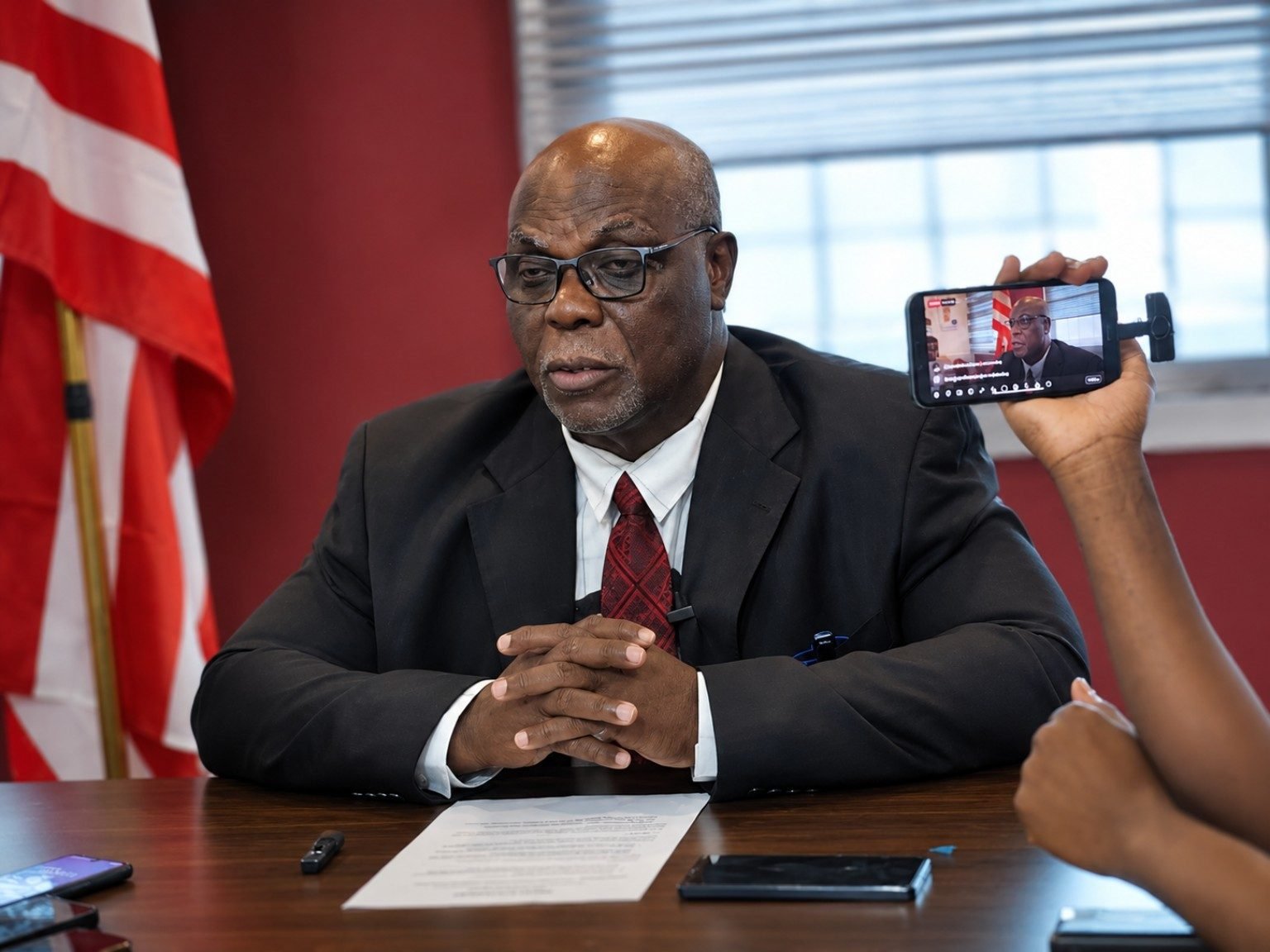
MONROVIA, Liberia — The Liberia National Red Cross Society (LNRCS) has renewed its appeal for public, private sector, and government support as the country enters the peak of the rainy season, warning that limited domestic funding is threatening its ability to respond to growing humanitarian needs.
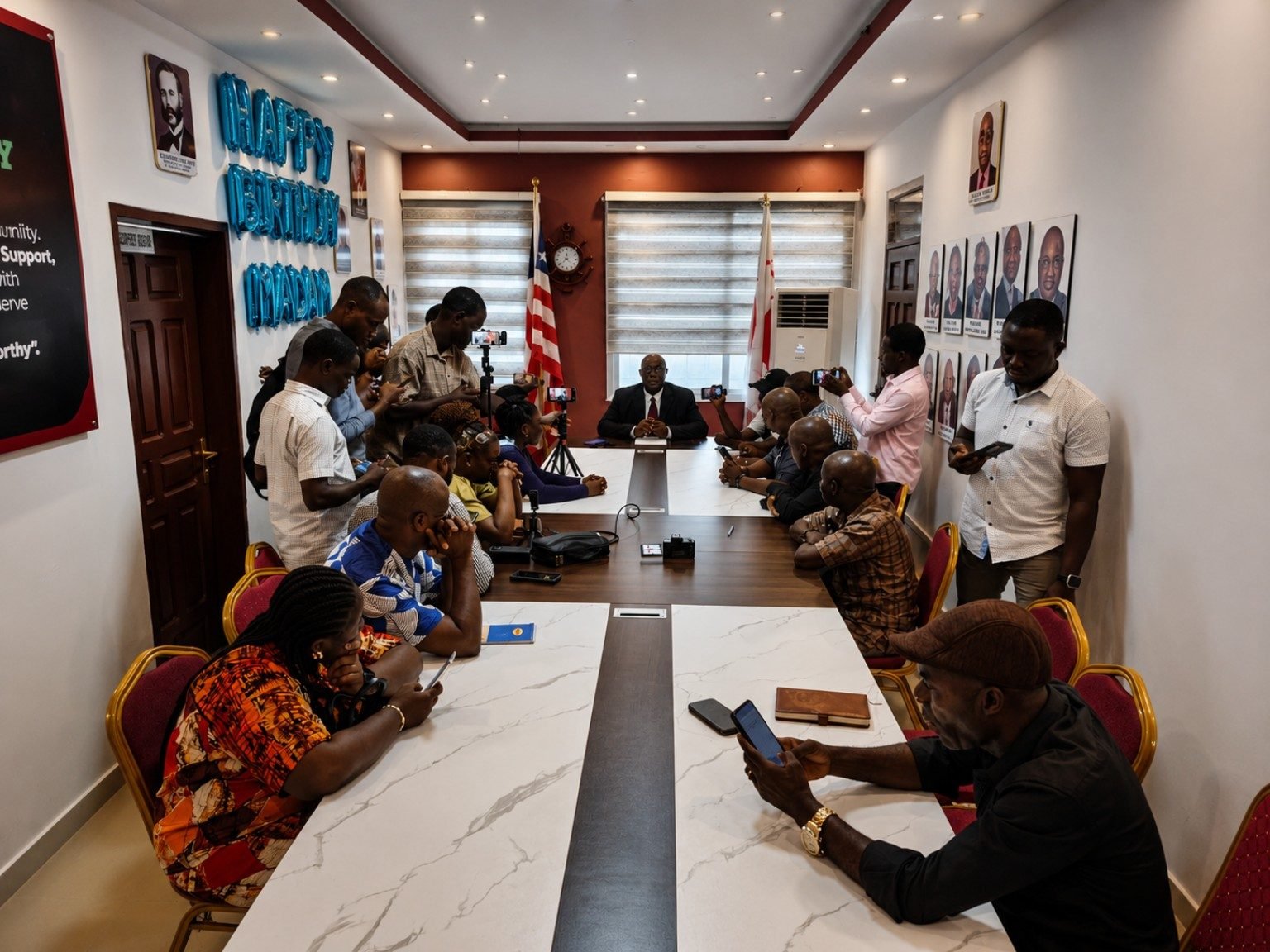
Speaking during a press conference held Wednesday morning at the organization’s headquarters on Lynch Street, Secretary General Gregory T. Blamoh provided an update on disaster response operations and outlined the financial challenges facing the Red Cross as communities continue to recover from windstorms, fires, and now widespread flooding.
March Appeal Yet to Receive Local Contributions
Blamoh recalled that in March the organization launched a nationwide appeal after windstorms and fires destroyed 213 homes and affected approximately 3,704 people across Liberia. The Red Cross appealed to Liberian businesses and citizens to raise US$50,000 for emergency relief while also requesting support from international partners.
Four months later, he disclosed that the local fundraising campaign has not generated any financial contributions.
“While the Liberian portion of the appeal has not yielded anything since we launched it in March, we were able to get funding through our federation, the International Federation of Red Cross and Red Crescent Societies,” Blamoh said.
International Support Provides Lifeline
According to Blamoh, the International Federation of Red Cross and Red Crescent Societies (IFRC) approved approximately US$365,000 for victims affected by windstorms and another US$170,000 for families impacted by fires.
The Swedish Red Cross also provided an additional US$11,225 specifically for fire victims.
Combined, the international assistance has enabled the organization to continue emergency interventions despite the absence of domestic donations.
How the Relief Assistance Is Distributed
Blamoh explained that Red Cross assistance focuses on two key areas:
- Cash assistance to help affected families purchase food and meet immediate household needs.
- Financial support for rebuilding damaged homes by purchasing roofing zinc, planks, nails, and other construction materials.
“If the windstorm blew out your house, you got money to be able to buy zinc, buy plank, buy nails, and try to put your roof back up. And you still got some money to be able to buy rice and something to be eating while you’re facing your roof,” Blamoh explained.
He announced that assistance for windstorm victims will conclude on July 31, while support for fire victims will continue until the end of August, after which the organization must submit accountability reports to its international donors.
Community Humanitarian Activities Continue
The Secretary General noted that the emergency response complements other humanitarian initiatives recently carried out by the Liberia National Red Cross Society, including:
- Beach clean-up campaigns conducted with UNICEF in Montserrado County.
- Menstrual hygiene awareness and sanitary pad donations in partnership with the Omega Leo Club.
Understanding How Federation Funding Works
Blamoh also used the briefing to explain how disaster financing operates within the International Federation, saying many Liberians misunderstand the funding process.
Following disaster assessments earlier this year, the Liberia National Red Cross submitted requests for emergency support through the Federation, which serves 192 national Red Cross and Red Crescent societies worldwide.
“Whatever money the Federation has, it’s like first come, first served,” Blamoh explained. “You may ask for $10. If you look at how many persons they’ve got to deal with, you probably get $5 or you get $4. But at least we got something, and we’re very grateful for that.”
He stressed that available funding only covers households identified during the initial disaster assessments conducted in January and February.
Limited Resources Prevent Additional Assistance
According to Blamoh, families whose homes were damaged after the original assessment period cannot currently receive assistance unless additional funding becomes available.
“If I buy a house in March, April or May, there is no money available to help you unless we can get somebody to help us.”
He urged the public not to interpret the situation as discrimination or favoritism.
“We don’t want people to think maybe the Red Cross is picking and choosing or they don’t want to help me. We will help everybody if we had the resources to do that. Sadly, we don’t.”
Flood Response Faces Serious Funding Shortfall
Blamoh said the organization is now responding to widespread flooding across Liberia while operating with significantly reduced government support.
According to him, the Government of Liberia reduced its annual subsidy to the Red Cross from US$100,000 last year to US$40,000 this year.
Even more concerning, he revealed that only US$10,000 of that allocation has actually been disbursed.
“That’s the only money we got here so far. $10,000 to help people who are affected by flood. I don’t know what it can do. I don’t know how many persons it can help. But this is the reason why we are renewing the appeal for Liberian people to help us so that we can help those people whose houses are damaged, whose communities are flooded, their properties destroyed, they are living with relatives, and they need our help,” Blamoh said.
Management has already committed the entire amount toward flood response operations.
Appeal to Government, Businesses and Citizens
With flood-related requests increasing daily, Blamoh renewed the organization’s appeal for additional support from the Government of Liberia, private companies, humanitarian partners, and ordinary citizens.
“We are appealing to everyone—government, businesses, corporations—to please come to our aid to help the Liberian people,” Blamoh said.
He encouraged individuals and institutions interested in supporting the flood response to contact the Liberia National Red Cross Society through its headquarters on Lynch Street in Monrovia.
Growing Humanitarian Pressure
The Liberia National Red Cross Society has remained one of the country’s primary emergency responders during seasonal disasters, including flooding, fires, and destructive windstorms. The organization continues to rely heavily on international partners such as the International Federation of Red Cross and Red Crescent Societies and bilateral partners like the Swedish Red Cross because domestic fundraising efforts have consistently fallen short.
This year’s reduction in government subsidy has placed additional pressure on the organization, which is simultaneously managing windstorm recovery, fire response, and ongoing flood operations. According to Blamoh, federation resources are also under strain because they are distributed among 192 member societies responding to emergencies around the world.
While hundreds of households affected by earlier disasters have already received emergency cash assistance and rebuilding support, many newly affected families remain without aid because current funding only covers those included in the original assessments.
As Liberia’s rainy season intensifies, the Red Cross says it will continue seeking additional financial support from government institutions, businesses, development partners, and the public to ensure vulnerable communities receive urgently needed humanitarian assistance.